
Ferdinand Hodler's perspective
Ferdinand Hodler – isn’t he the painter of the Swiss mountains? Peaks. Lakes. A clear horizon?
Yes. And yet his work is about far more than landscape. It is about attitude. About perspective. And about the question of what remains when one rises above the everyday.
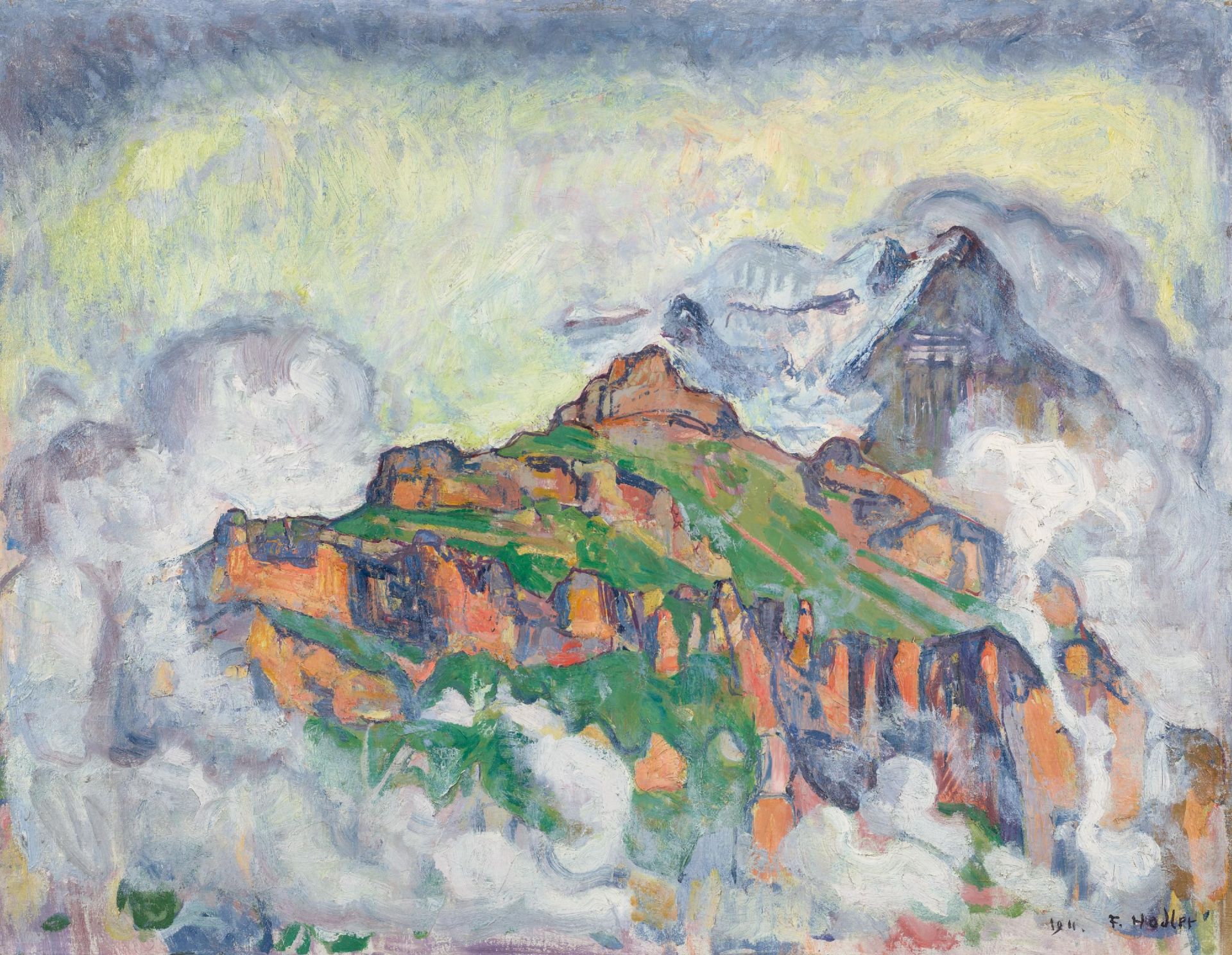
Hardly any artist has shaped Switzerland’s image and sense of identity as lastingly as Hodler. His mountains are not studies of nature; they are assertions. Clearly structured, rhythmically composed, repeated and further developed. The Stockhorn range and Lake Thun, the Dents du Midi, the Grammont, the Jungfrau. Motifs not varied to please, but to understand. Those who seek elevation must dare precision.
This attitude connects Hodler’s work in a remarkable way with a place like the Dolder Grand. Here, too, the view opens up. Not in a spectacular sense, but with focus and intent. The landscape is not consumed, it is perceived. Distance creates clarity. And from this elevated perspective emerges the calm that Hodler sought and condensed into paint.
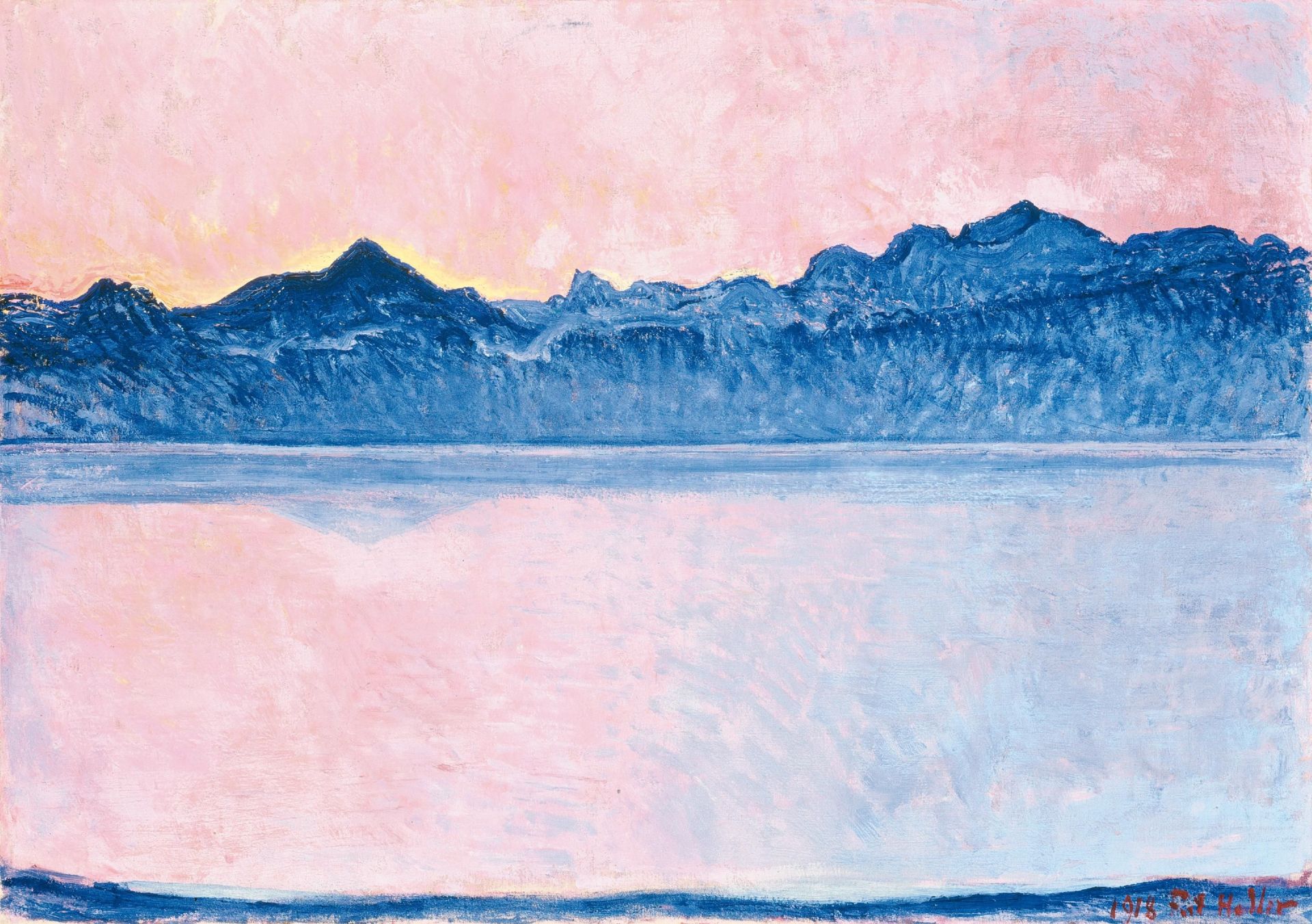
This attitude becomes especially visible in his late work. In the years between 1913 and 1918, when Hodler was already widely recognised and independent, he radically reduced his painting. Series and variations define his work. Landscape, self portrait, woman, death. Everything returns. Everything becomes clearer. Everything becomes more existential. The mountains turn into mirrors of the inner self. The solitary peak as a symbol of steadfastness, but also of solitude.
The close up views of the Jungfrau with the Schwarzmönch appear as if Hodler had drawn the peaks closer with binoculars. The scene is heightened, almost detached. What matters is not vastness, but concentration. A quality that also takes hold up here, when the city and everyday life recede into the background and space opens up for what is essential.
In parallel, Hodler turns his gaze toward himself. His late self portraits dispense with all ornamentation. The face stands alone within the pictorial space. Shaped like an alpine landscape, furrowed, serious, traversed by an increasingly visible brushstroke. Realism and introspection converge. Here, too, there is no pose, only attitude.
Ferdinand Hodler was not a painter of chance. He sought order, rhythm and lawfulness. His parallelism was more than a stylistic device. It was an attitude. And it is precisely in this that his affinity with a place that consciously rises above the fleeting becomes clear. High above the city, between art, landscape and architecture, Hodler’s way of thinking continues to unfold its effect to this day. Quiet, clear and marked by timeless consistency.
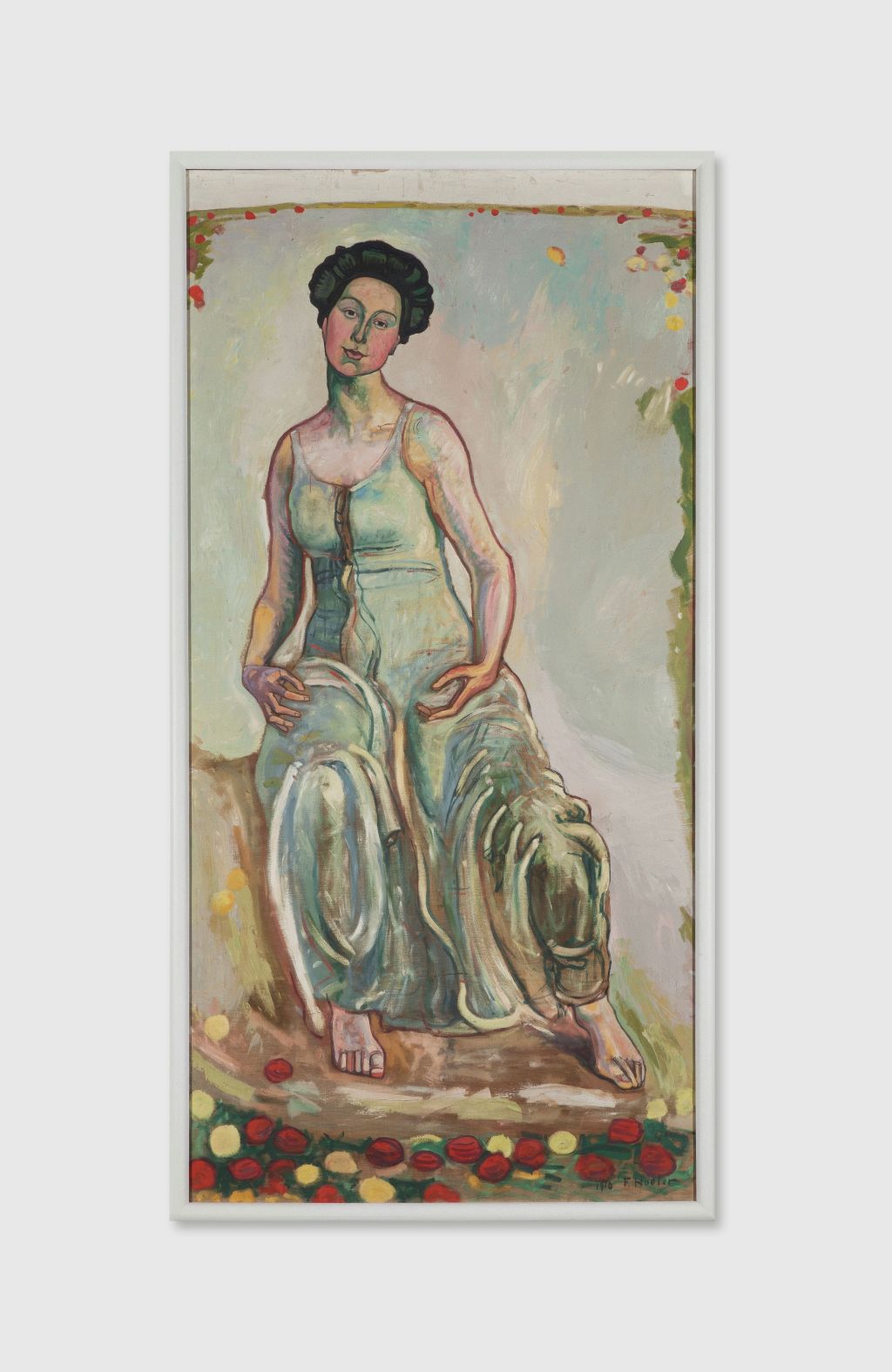
Today, this attitude can be further explored in two places. The works featuring the iconic mountain motifs are on view at Kunsthaus Zürich in the permanent exhibition, allowing for a direct encounter with Hodler’s thinking in series, rhythm and reduction. In parallel, The Restaurant at the Dolder Grand sets a deliberate accent with Heilige Stunde. The work is not presented in isolation, but embedded within a curated collection of over 100 artworks throughout the hotel. Here, too, the focus is not on fleeting observation, but on concentration, on pausing, and on that quiet clarity that continues to define Hodler’s work to this day.